
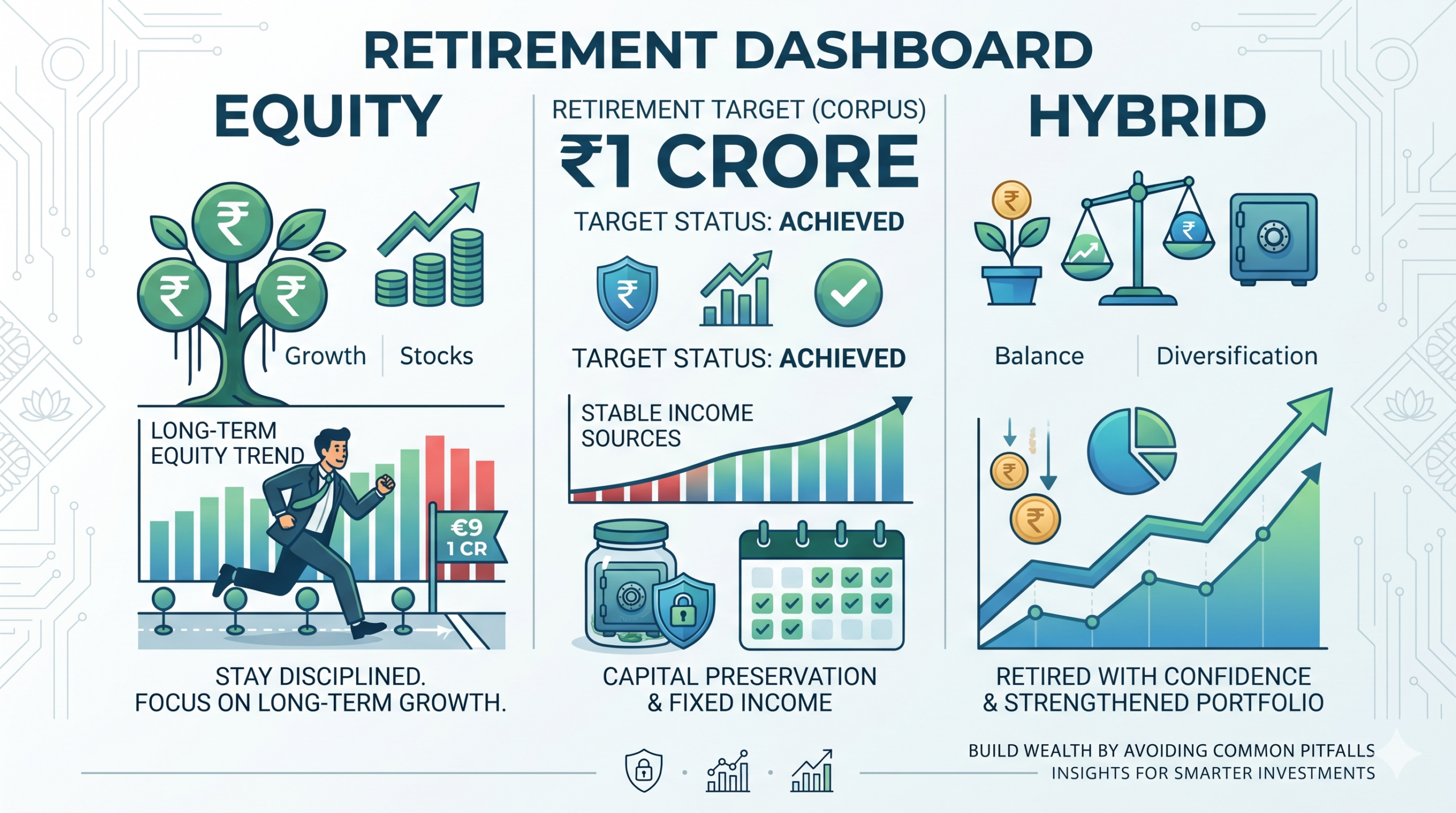
A ₹50,000 monthly salary may not feel like enough for a large retirement goal, but retirement planning is rarely about one big investment. It is usually about disciplined monthly investing, time, and periodic increases in contribution.
SIP-based retirement planning guidance consistently emphasizes four things: start early, define the retirement target, align fund choice to time horizon and risk profile, and review the plan periodically.
Step 1: Think in percentages, not just rupees
If your salary is ₹50,000 per month, the first useful question is not “Can I build ₹1 crore?” It is “What percentage of income can I invest steadily?”
Even a moderate SIP started early has a better chance than a larger SIP started late. Compounding rewards time more than drama.
Step 2: Give the goal enough years
Retirement is a long-term goal. The longer the runway, the more useful equity-oriented investing and SIP discipline can become.
Long-term planning matters because:
- Inflation raises future living costs.
- Retirement may last decades.
- Monthly investing needs time to compound meaningfully.
Industry guidance on retirement planning repeatedly stresses inflation, early starting, and appropriate fund selection as core drivers of success.
Step 3: Increase SIP with income growth
This is where many investors underestimate their own potential. A person earning ₹50,000 today may not earn the same amount for the next 15 or 20 years.
A strong strategy is:
- Start with an affordable SIP today.
- Increase the SIP every year as salary rises.
- Review the target once a year.
That annual step-up often matters more than trying to start with an unrealistically high amount.
Step 4: Choose the right fund mix
A retirement goal that is many years away is usually treated differently from a near-term goal. Early-stage retirement accumulation often leans toward growth-oriented categories, while allocation may become more balanced as retirement approaches.
A practical lifecycle mindset:
- Early years: growth focus
- Mid phase: balanced review
- Near retirement: gradual risk reduction
Step 5: Avoid the classic mistakes
- Delaying because the salary feels “too small”
- Investing without increasing SIP over time
- Using short-term products for long-term goals
- Panic stopping during market declines
- Ignoring inflation in retirement planning
What really makes ₹1 crore possible
Not magic.
Not one perfect fund.
Not timing the market.
It usually comes from:
- Starting early
- Staying invested
- Increasing SIP over time
- Reviewing annually
- Keeping the goal visible
Final thought
A ₹1 crore retirement goal on a ₹50,000 salary is not a one-month challenge. It is a long-term discipline project. If you build the habit early and raise contributions with income, the goal becomes far more realistic than it first appears.