
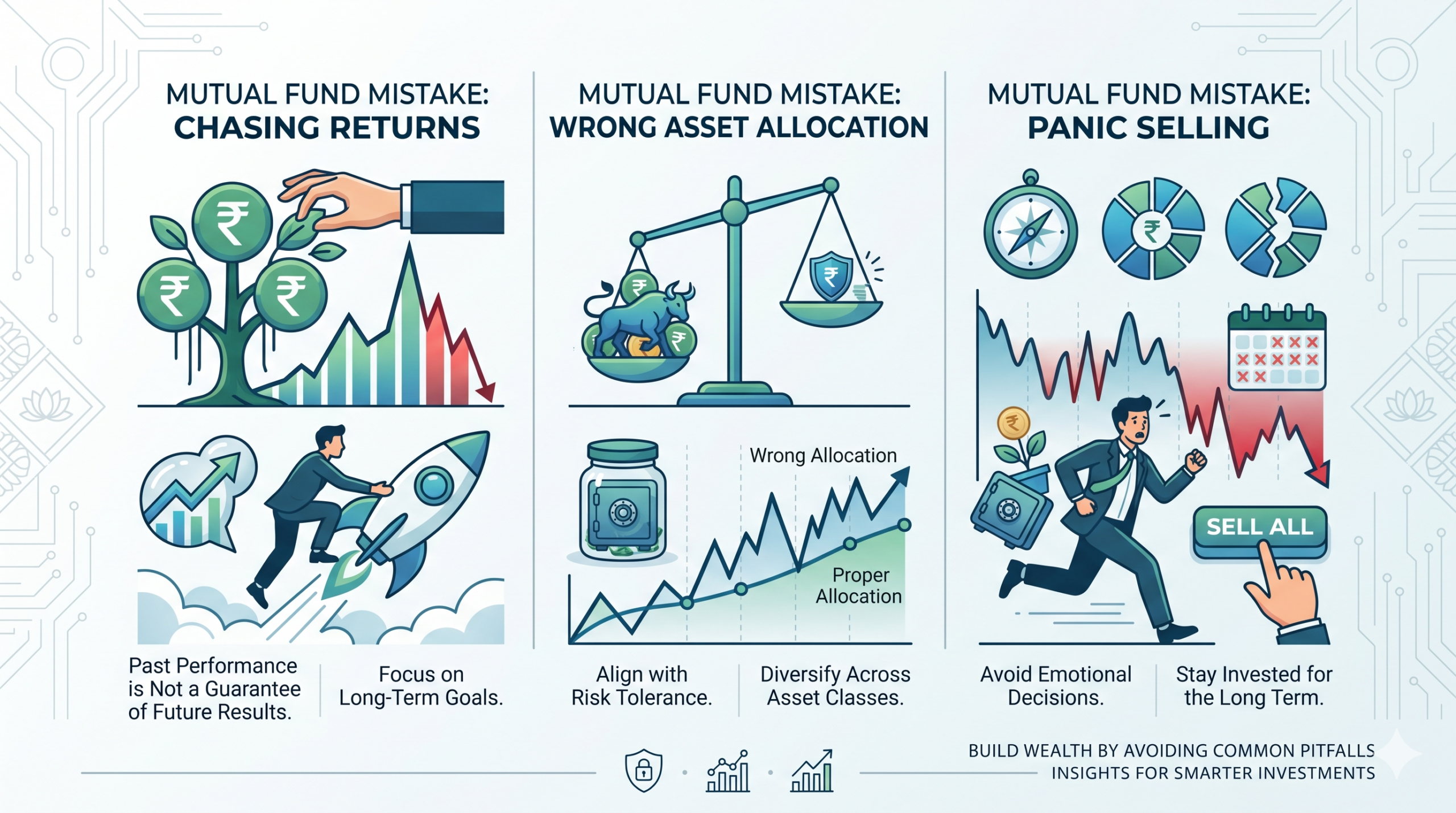
Most mutual fund investing mistakes are not technical. They are behavioral. Investors usually know they should stay disciplined, but they still get distracted by returns, fear, noise, and shortcuts.
Investor education frameworks from AMFI and SEBI are designed to reduce exactly this problem by helping investors understand categories, process, and suitability before investing.
Mistake 1: Chasing recent returns
A fund that performed best last year often becomes the most attractive to new investors. But recent returns alone do not tell you whether the fund suits your goal, your timeline, or your risk comfort.
Why this is risky:
- Last year’s winner may not remain the winner
- A hot category may cool down sharply
- You may enter at the wrong expectation level
Returns matter, but suitability matters first.
Mistake 2: Picking a fund without matching the goal
This is one of the most common and costly errors. Investors sometimes use aggressive funds for near-term needs or overly conservative options for long-term growth goals.
A better approach:
- Match category to time horizon
- Match risk to emotional comfort
- Match the fund to the purpose of the money
AMFI’s categorization material makes it clear that different categories are meant for different investor needs and profiles.
Mistake 3: Stopping at the wrong time
Many investors start confidently in a rising market and stop the moment markets become uncomfortable. This breaks the main advantage of long-term investing: discipline through cycles.
SIP-based investing is powerful partly because it removes the pressure to predict the “perfect” entry point. Long-term investing guidance repeatedly emphasizes consistency and review over emotional reaction.
How to avoid these mistakes
Use a simple checklist before every investment:
- What is the goal?
- When will I need the money?
- Can I tolerate volatility?
- Is this amount sustainable?
- Am I investing because it fits my plan or because it is trending?
A smarter investing mindset
Good investing is often boring in the best way. It is planned, measured, reviewed, and repeated. Strong outcomes usually come from a sound process followed for years, not from constantly switching based on headlines.
Final thought
If you avoid just these three mistakes, you already improve your odds significantly. In investing, avoiding obvious errors is often more valuable than trying to find clever shortcuts.